
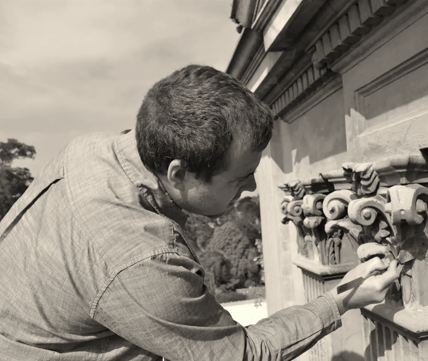
One of the first questions I hear from homeowners is:
“Can we just modernise it?”
Short answer?
Yes.
But not like that.
Owning a heritage home in Melbourne isn’t about freezing it in time. It’s about understanding where flexibility ends and responsibility begins.
And that line isn’t guesswork.
It’s policy.
The Reality of Heritage Overlay Controls
Across Melbourne, thousands of properties sit within Heritage Overlay zones under local council planning schemes. According to the Victorian Planning Provisions, Heritage Overlays exist to conserve places of aesthetic, architectural, historic and social significance.
That means certain changes — demolition, façade alterations, visible additions — typically require planning approval.
Internal renovations? Often permitted.
Rear extensions? Possible, if designed sympathetically.
Street-facing demolitions? Almost always restricted.
The key isn’t “What do I want to change?”
It’s “What contributes to the building’s heritage significance?”
As Heritage Victoria states, the goal is not to prevent change, but to ensure that change respects cultural value.
And cultural value has real economic consequences.
If you look at the broader performance of protected properties, the evidence behind why Melbourne’s most valuable buildings aren’t the newest ones shows that preservation often underpins long-term price resilience rather than limiting it.
What You Can Typically Change
Let’s remove the fear factor.
In most Heritage Overlay properties, you can:
• Renovate kitchens and bathrooms internally
• Reconfigure non-structural internal walls
• Upgrade plumbing, electrical and insulation
• Add rear extensions, subject to design approval
• Improve energy efficiency measures discreetly
The Victorian Government’s heritage guidance recognises that heritage buildings must remain functional to remain viable.
Liveability isn’t the enemy of preservation.
Poor design is.
What You Can’t (Or Shouldn’t) Touch Lightly
Where owners run into trouble is visible character elements.
Original façades
Decorative parapets
Cornices and mouldings
Verandahs
Front fences
The City of Melbourne and many inner councils place significant emphasis on streetscape integrity. Once a streetscape is altered inconsistently, its collective heritage value diminishes.
And when streetscape consistency erodes, so does the premium attached to that neighbourhood.
The Australian Housing and Urban Research Institute has noted that conservation controls often stabilise property values by maintaining aesthetic cohesion across suburbs.
Translation:
You’re not just protecting your house.
You’re protecting the block.
The Financial Misconception
Many homeowners assume Heritage Overlay equals reduced flexibility equals reduced value.
The opposite is often true.
CoreLogic data consistently shows that established inner-Melbourne suburbs with strong architectural identity continue to outperform newer growth corridors in long-term capital growth.
Scarcity creates resilience.
Protection creates scarcity.
That combination creates defensible value.
The Smart Way to Approach Change
The real win isn’t avoiding change.
It’s designing intelligently.
Successful heritage restoration projects in Melbourne follow a simple framework:
Preserve the street presence
Restore original detailing
Modernise discreetly behind the façade
Use appropriate traditional materials
That balance protects both lifestyle and long-term capital performance.
The Bigger Picture
A heritage home isn’t a museum piece.
It’s a living asset.
But it’s an asset that exists within a broader architectural ecosystem — a streetscape, a suburb, a planning framework.
When handled well, heritage controls don’t restrict opportunity.
They protect value.
And in a city where land is finite and authentic character cannot be recreated, that protection matters more than most people realise.
Ready for the next one.