
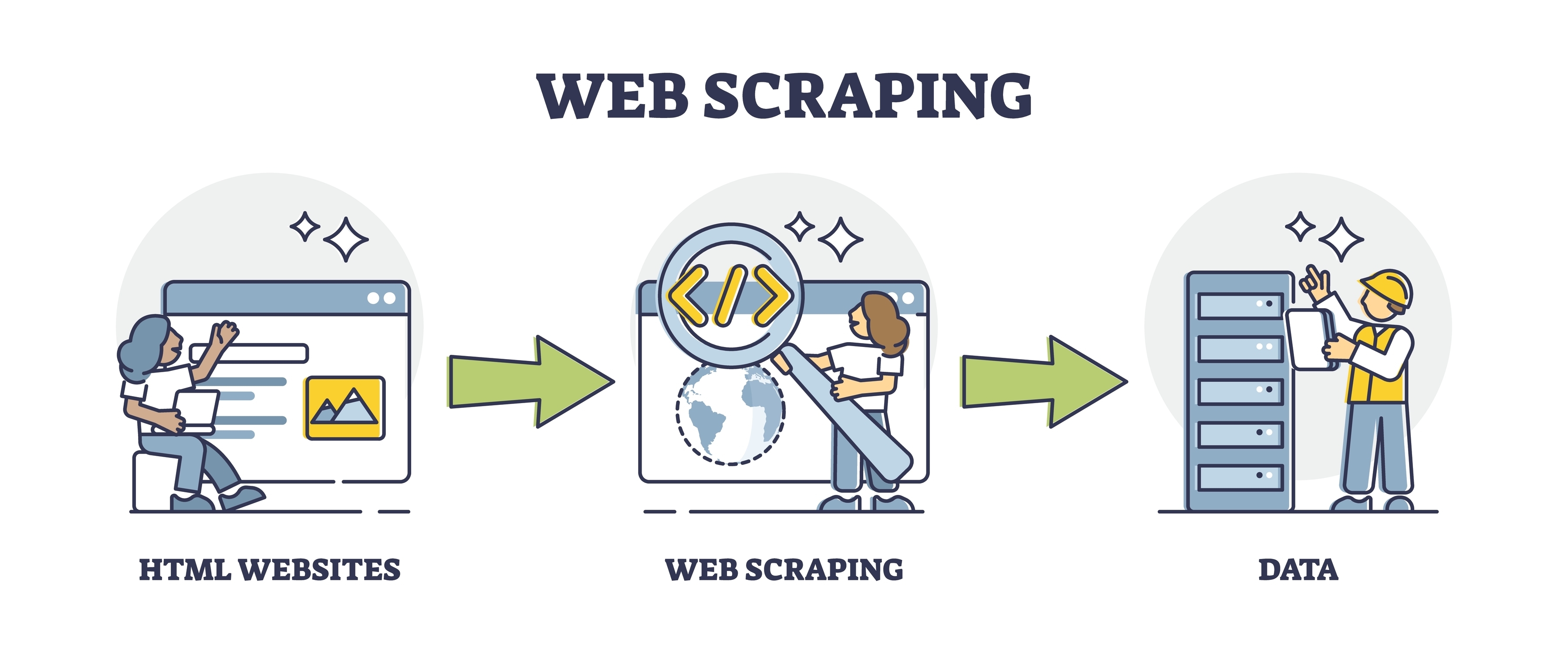
The healthcare industry generates massive amounts of data every day—from patient records and medical research papers to clinical trial results and healthcare news. Accessing this information quickly and efficiently is crucial for Generate sitemap improving patient care, advancing research, and making informed decisions. However, much of this data is dispersed across various sources like hospital websites, government databases, medical journals, and clinical reports. Traditional data collection methods often fall short in keeping up with the vast volume and complexity of this information. AI-powered web scraping is revolutionizing how healthcare professionals, researchers, and businesses collect data by automating and enhancing the process, ensuring that critical insights are gathered faster, more accurately, and at a larger scale. This article explores how AI web scraping is transforming data collection in healthcare and driving improvements across the sector.
Automating Data Extraction from Multiple Sources
In healthcare, time is of the essence. Extracting relevant data from diverse sources manually, such as academic journals, government databases, healthcare websites, and social media, can be slow and error-prone. AI-powered web scraping automates this process, enabling healthcare professionals and organizations to access the data they need without the labor-intensive effort traditionally involved. AI tools can extract data from medical research papers, clinical guidelines, drug databases, and news articles in a fraction of the time it would take to gather information manually. By leveraging machine learning (ML) models and natural language processing (NLP), AI web scraping can identify relevant data points, such as clinical trial results, patient outcomes, drug efficacy, and treatment protocols, even from unstructured content. This automation saves time, reduces the risk of human error, and ensures that the most up-to-date and relevant information is gathered continuously.
Improving Accuracy in Clinical Data Collection
Accuracy is critical in healthcare, where decisions based on incorrect or incomplete data can have serious consequences. AI web scraping enhances the precision of data collection by using advanced algorithms that can identify and extract relevant data from complex, unstructured sources. For example, AI tools can scrape electronic health records (EHRs), medical research publications, and clinical trial data while filtering out irrelevant or erroneous information. Furthermore, by integrating AI-driven data validation techniques, these tools can cross-check and verify extracted data, ensuring that the collected information is reliable. For instance, if a healthcare provider is monitoring the results of a specific drug across multiple studies, AI can ensure that the data collected from different sources is consistent and matches certain quality standards. This capability significantly reduces the risk of mistakes that may arise from manual data entry or outdated information.
Enhancing Real-Time Data Collection for Decision-Making
Real-time data collection is particularly valuable in the healthcare sector, where fast and informed decision-making is crucial for improving patient care. AI-powered web scraping enables the automatic and real-time extraction of critical data from medical news, clinical trials, or even live updates from healthcare forums. For instance, if a new medical breakthrough or a safety warning for a particular drug emerges, AI tools can quickly scrape relevant information from reputable sources and immediately present it to the healthcare team. This can lead to faster decision-making regarding patient care, drug prescriptions, or treatment approaches. Additionally, AI can help monitor trends in healthcare, such as tracking the prevalence of diseases or the success rates of particular therapies, allowing healthcare providers to adjust their practices based on the latest insights.
Facilitating Medical Research and Innovation
Medical research requires access to vast amounts of data, including clinical trial results, medical journal publications, and other research papers. However, manually collecting and analyzing this data can be a labor-intensive and time-consuming task. AI web scraping helps researchers stay ahead of the curve by automatically gathering the latest research findings, clinical trial data, and published studies from various medical databases and websites. By automating this process, researchers can focus on interpreting the data and driving innovation rather than spending time gathering it. Moreover, AI tools can process large datasets from multiple sources, uncovering hidden patterns or correlations that may not be immediately apparent. For example, AI might analyze clinical trial results across a range of studies to identify potential new uses for existing drugs, driving innovation in medical treatments and therapies.
Ethical Considerations and Data Privacy in Healthcare Web Scraping
While AI web scraping offers immense potential for enhancing data collection in healthcare, it also raises important ethical and data privacy concerns. Health data is highly sensitive, and any scraping activity must be conducted in compliance with regulations such as the Health Insurance Portability and Accountability Act (HIPAA) in the United States and the General Data Protection Regulation (GDPR) in Europe. AI tools must be designed with strict safeguards to protect patient privacy and ensure that sensitive information is handled responsibly. Ethical web scraping practices include respecting the terms of service of websites and databases, obtaining proper consent for using patient data, and ensuring that the data collected is anonymized and secure. Healthcare organizations must prioritize these considerations when implementing AI-powered scraping solutions to avoid legal issues and protect patient trust.
Conclusion
AI-powered web scraping is playing an increasingly important role in transforming data collection in healthcare, offering improvements in efficiency, accuracy, and scalability. By automating the extraction of critical information from multiple sources, AI tools enable healthcare providers, researchers, and organizations to make faster, more informed decisions. Whether it’s streamlining the collection of clinical data, monitoring real-time developments in the medical field, or facilitating the analysis of vast research datasets, AI is helping the healthcare industry move toward more data-driven, patient-centered care. However, as with all technological advancements, it’s essential to approach AI-powered web scraping responsibly, ensuring that ethical standards and data privacy regulations are upheld. With these precautions in place, AI web scraping has the potential to revolutionize healthcare data collection and drive innovations that improve patient outcomes, medical research, and overall healthcare delivery.
 John
John  admin
admin